

Anna’s Hummingbird
Anna’s Hummingbirds are among the most common hummingbirds along the Pacific Coast, yet they’re anything but common in appearance. With their iridescent emerald feathers and sparkling rose-pink throats, they are more like flying jewelry than birds. Though no larger than a ping-pong ball and no heavier than a nickel, Anna’s Hummingbirds make a strong impression. In their thrilling courtship displays, males climb up to 130 feet into the air and then swoop to the ground with a curious burst of noise that they produce through their tail feathers.

General Information
Range

Habitat
Anna’s Hummingbirds are common in urban and suburban settings as well as wilder places such as chaparral, coastal scrub, oak savannahs, and open woodland. They are notably common around eucalyptus trees, even though eucalyptus was only introduced to the West Coast in the mid-nineteenth century.
Food
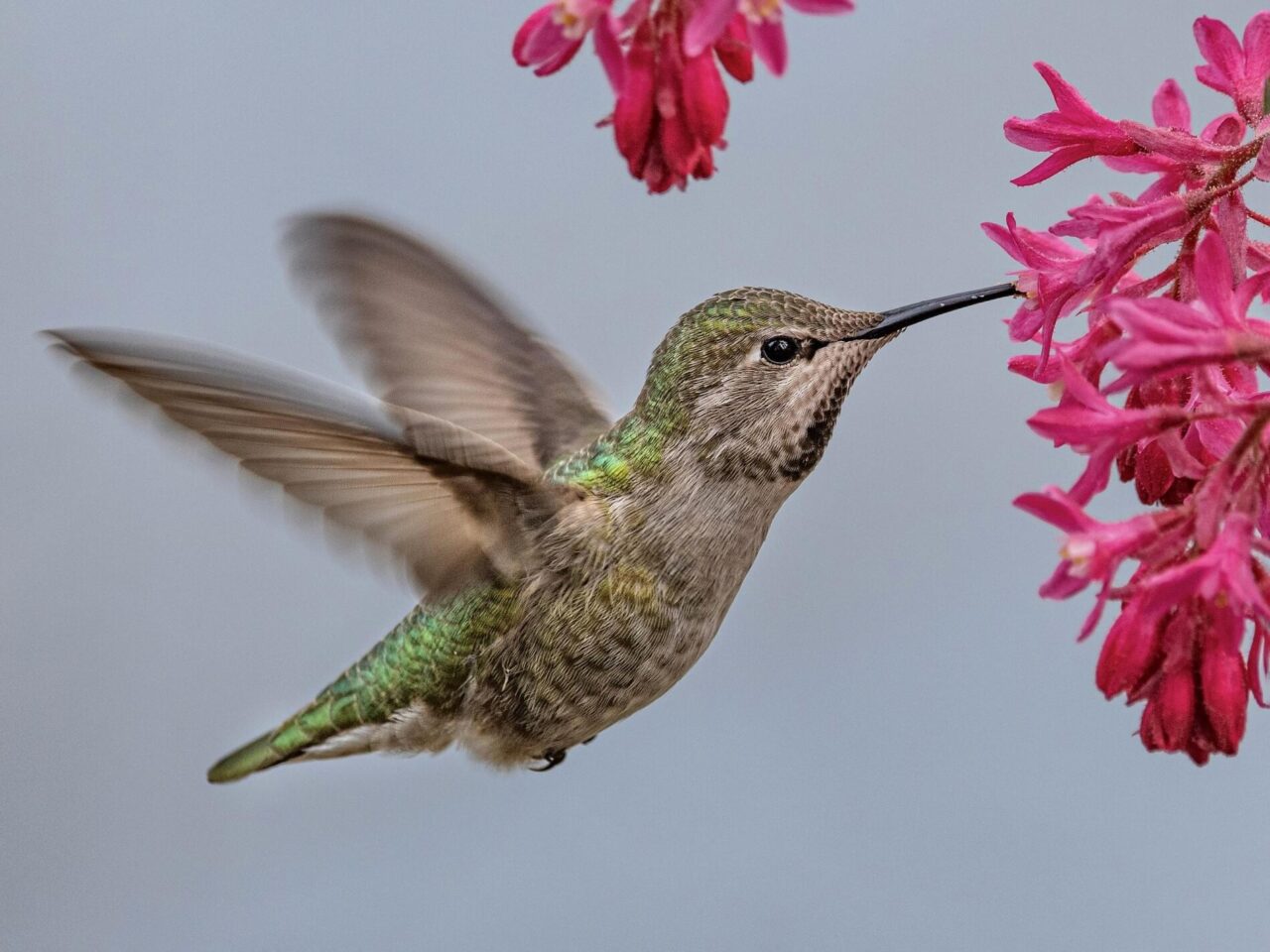
Anna’s Hummingbirds eat nectar from many flowering plants, including currant, gooseberry, manzanita, and many introduced species such as eucalyptus. They also eat a wide array of insects from understory leaves, crevices, streambanks, or caught in spider webs, plucked from the air, or taken from flowers. Primarily they target smaller insects, like midges, whiteflies, and leaf hoppers (one female was found with 32 leafhoppers in her stomach at once). They also help themselves to tree sap (and insects caught in it) leaking out from holes made by sapsuckers.
Behavior
Anna’s Hummingbirds hover deftly and zip from flower to flower. They are at their most splendid when performing their wild courtship dives. A male flies as high as 130 feet in the air and then plummets toward the ground (and the watching female), where he lets loose a unique short high-pitched noise made by air whipping through his tail feathers. As courtship progresses, the male chases a receptive female, who leads him toward her nest site, and perches again. The male then performs a “shuttle display,” where he swings back and forth about a foot above the female, keeping his body horizontal and his head down toward the female, often singing an intense song. When males are not feeding or performing, they often sit fairly high in a bush or small tree, noisily chattering. Males and females do not form pairs, and both sexes likely mate with more than one individual per season. Only the females care for the young.
Nesting
The female builds the nest out of plant down and spider webs, sitting in the nest and building the cup rim up around her. Nests take around a week to build and are 1 inch tall by 1.5 inches in diameter. They may be built of cattail, willow, leaves, thistle, or small feathers and bound together by spider webs or insect cocoons. They may decorate the outside with lichens, mosses, or even paint chips. They sometimes steal these from other active nests.
How to Identify
Typical Sound
Appearance
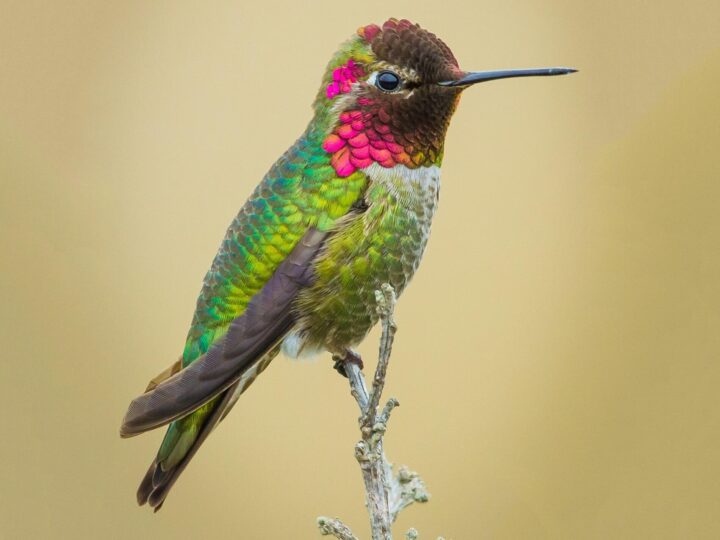
Size & Shape
Tiny among birds, Anna’s are medium-sized and stocky for a hummingbird. They have a straight, shortish bill and a fairly broad tail. When perched, wingtips meet the tip of their short tail.
Color Pattern
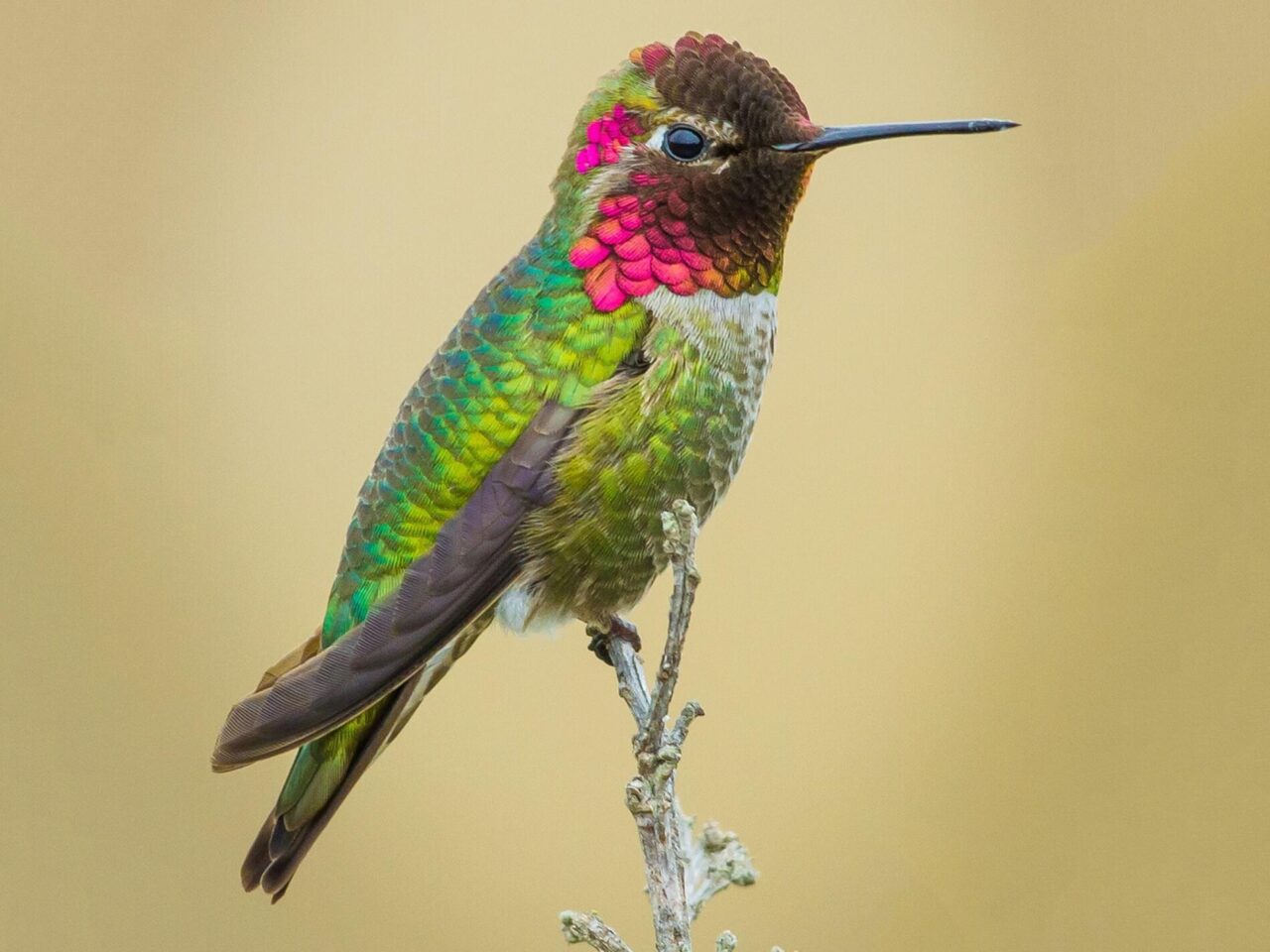
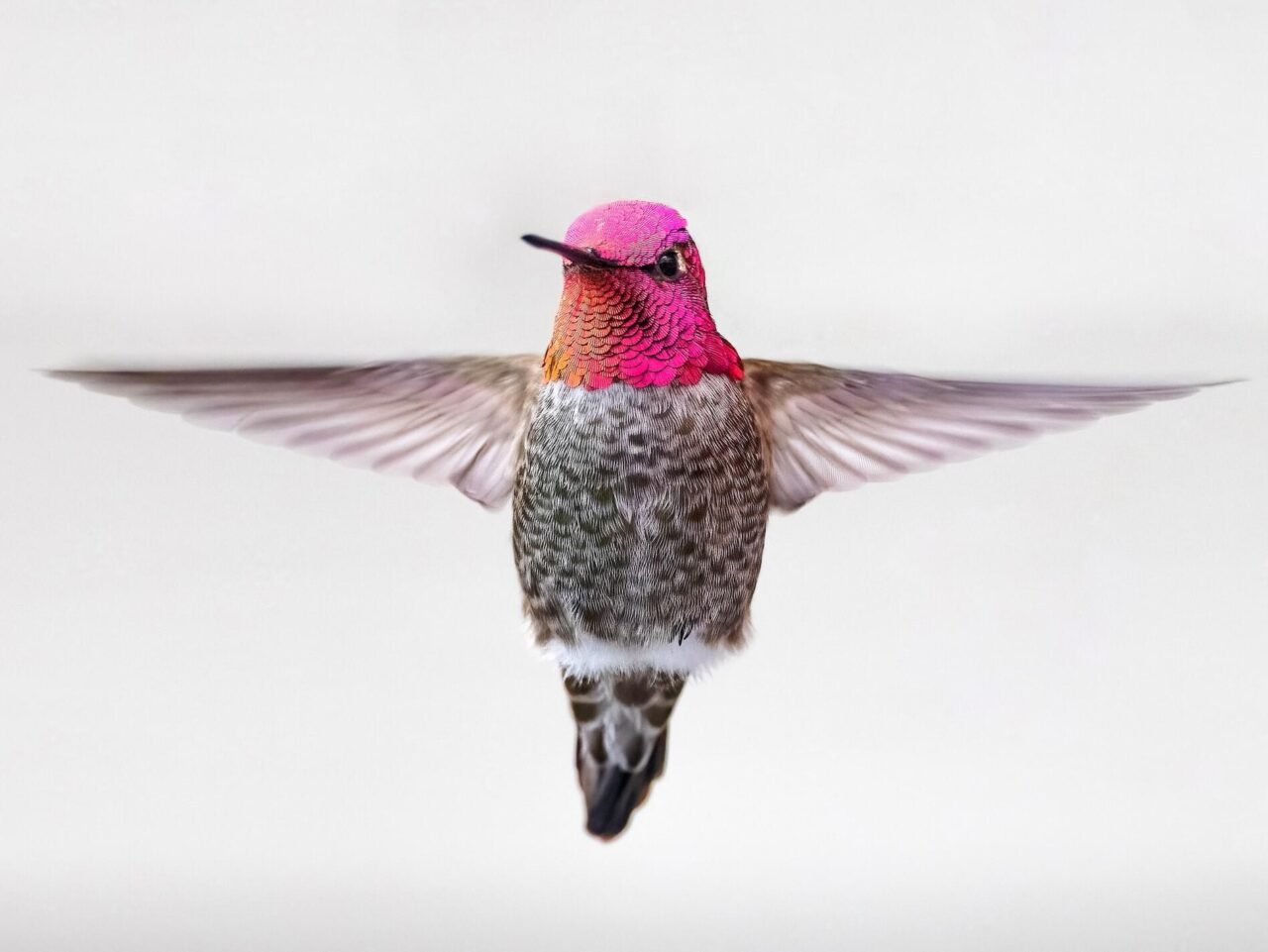
Anna’s Hummingbirds are mostly green and gray, without any rufous or orange marks on the body. The male’s head and throat are covered in iridescent reddish-pink feathers that can look dull brown or gray without direct sunlight.
Behavior
Anna’s Hummingbirds are a blur of motion as they hover before flowers looking for nectar and insects. Listen for the male’s scratchy metallic song and look for him perched above head level in trees and shrubs.
Habitat
Anna’s Hummingbirds are common in yards, parks, residential streets, eucalyptus groves, riverside woods, savannahs, and coastal scrub. They readily come to hummingbird feeders and flowering plants, including cultivated species in gardens.
Plumage Photos
© Kyle Braney / Macaulay Library
© Mason Maron / Macaulay Library
© Ryan Sanderson / Macaulay Library
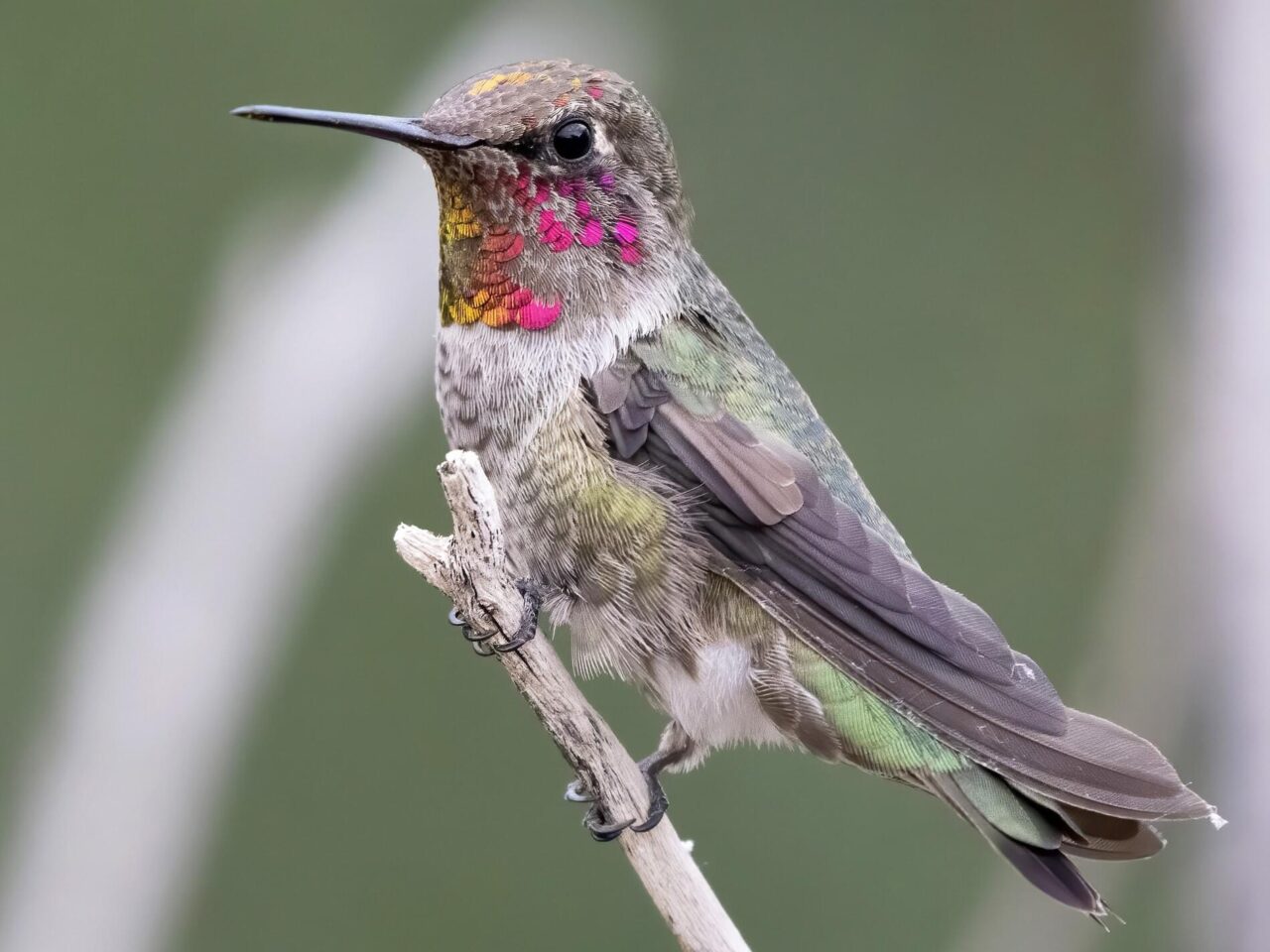
© Marky Mutchler / Macaulay Library
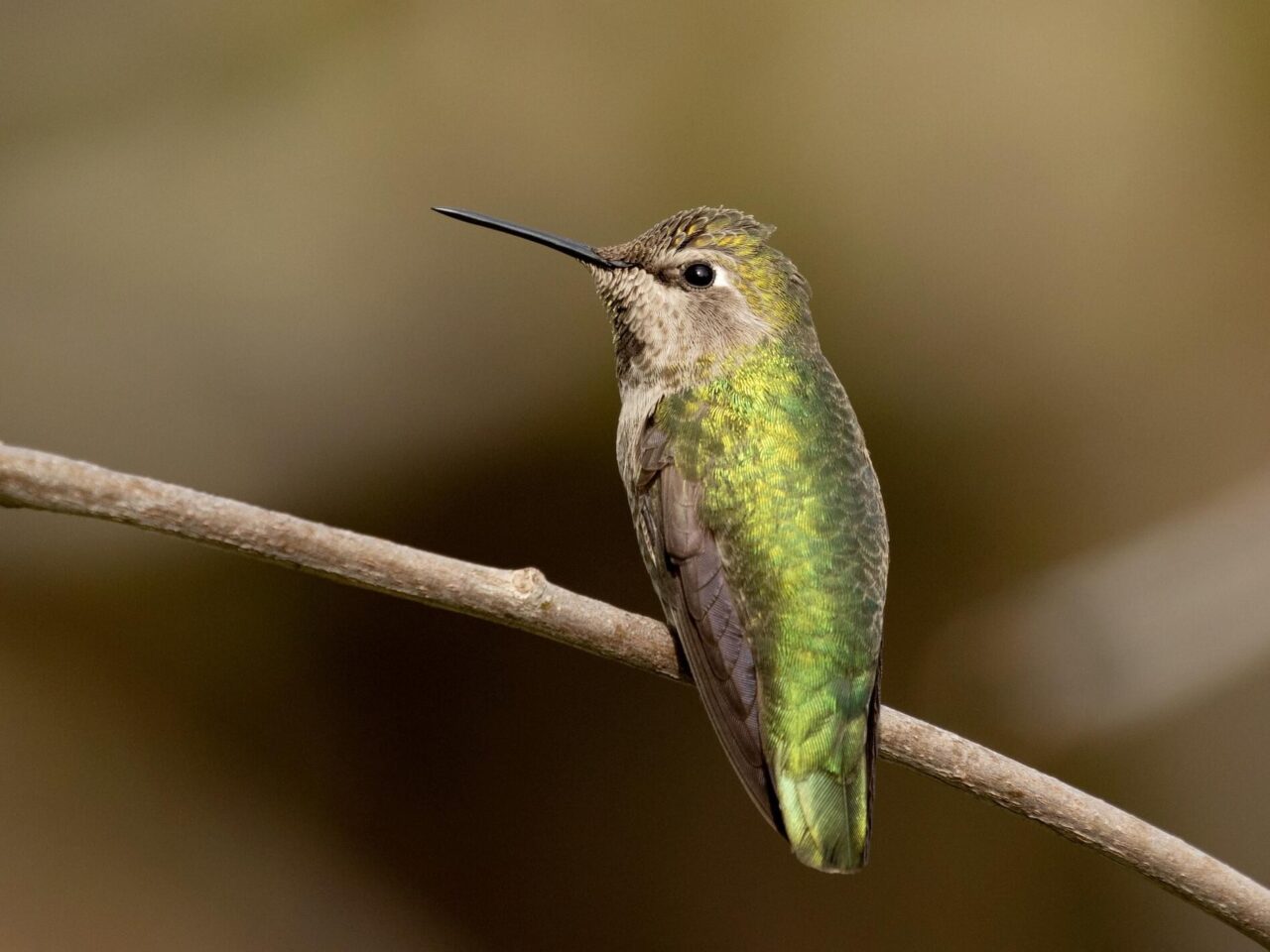
© Ronan Nicholson / Macaulay Library
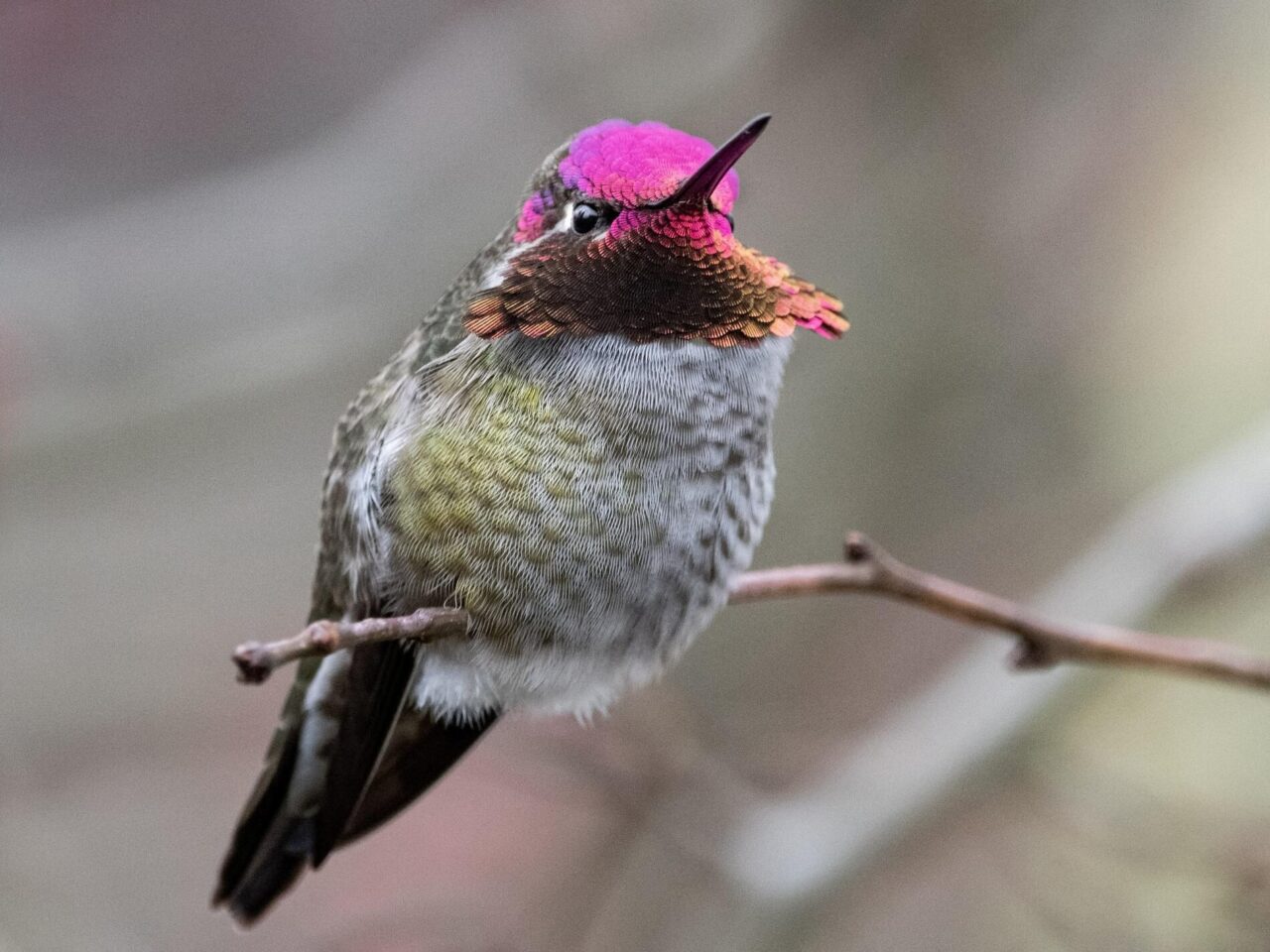
© Mason Maron / Macaulay Library
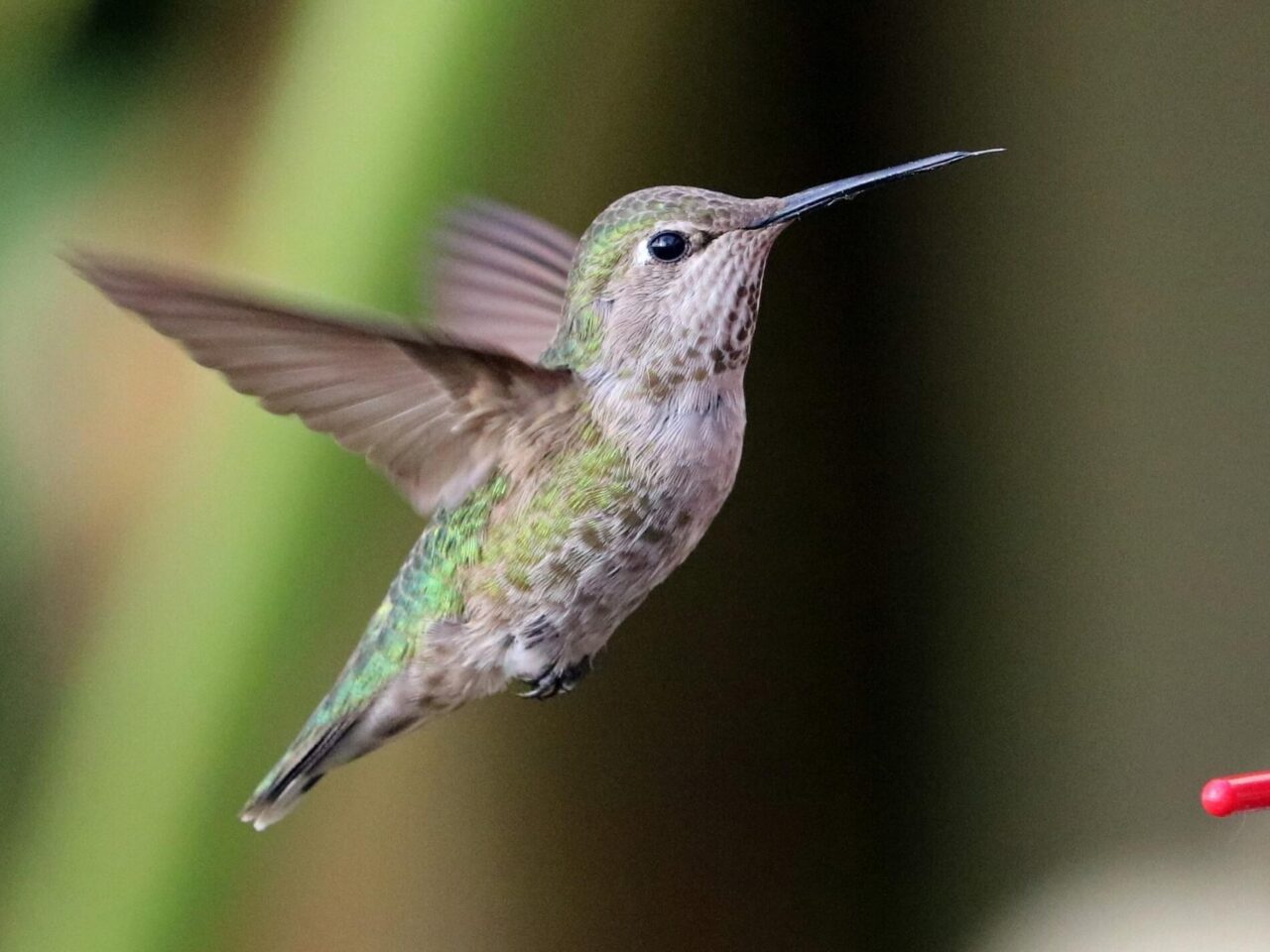
© Ryan Winkleman / Macaulay Library
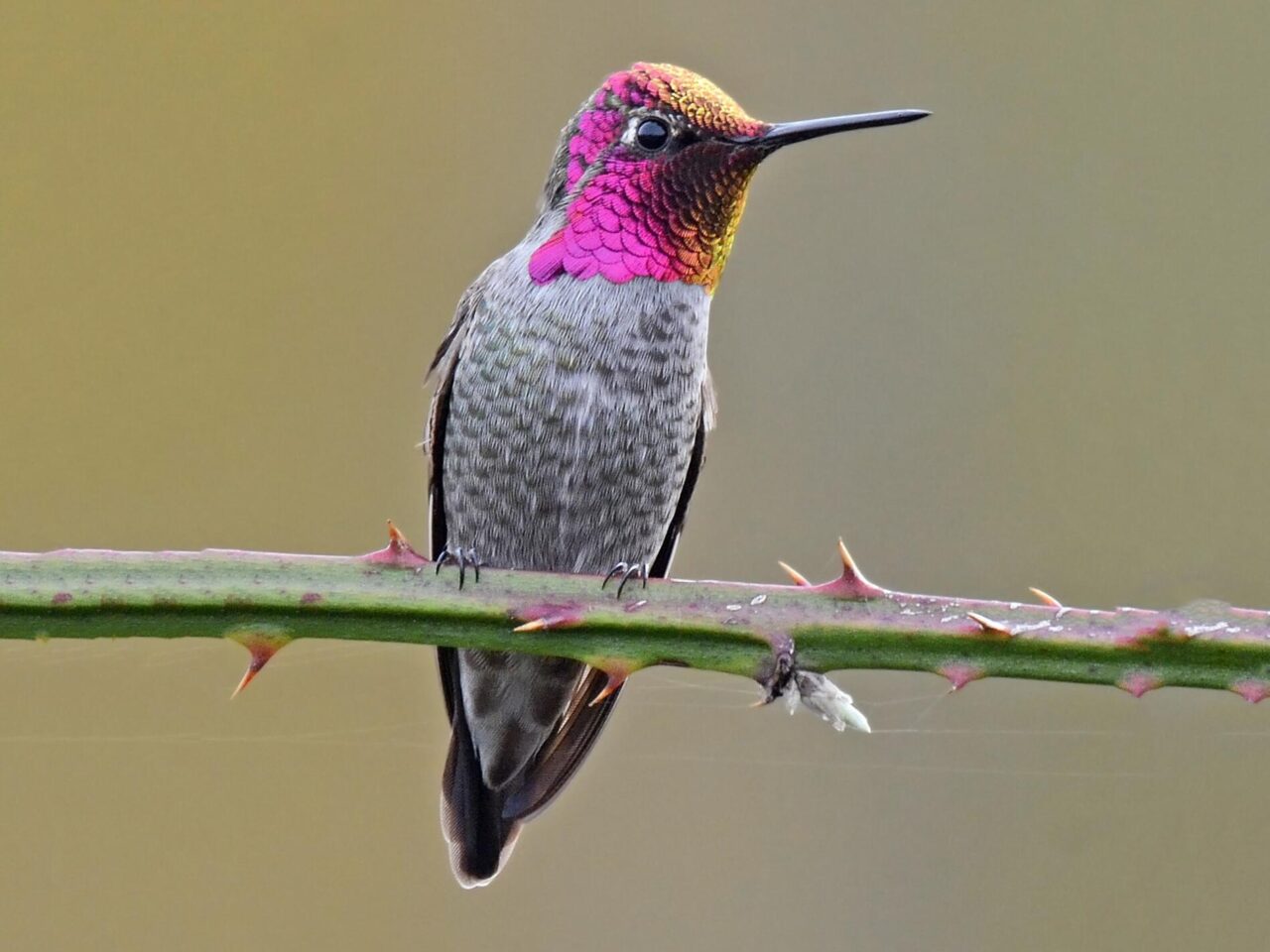
© Steven Mlodinow / Macaulay Library
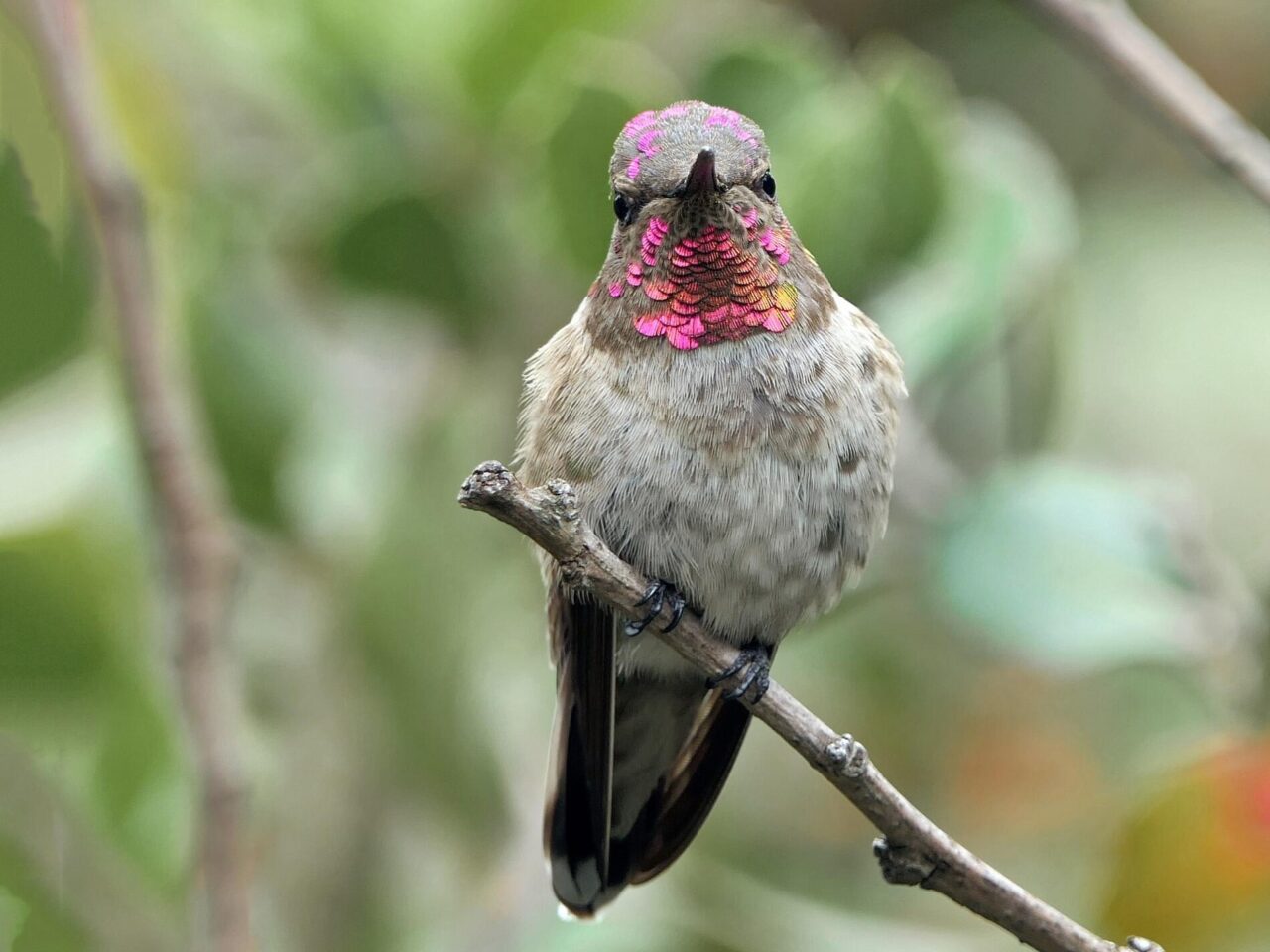
© Robert Hamilton / Macaulay Library
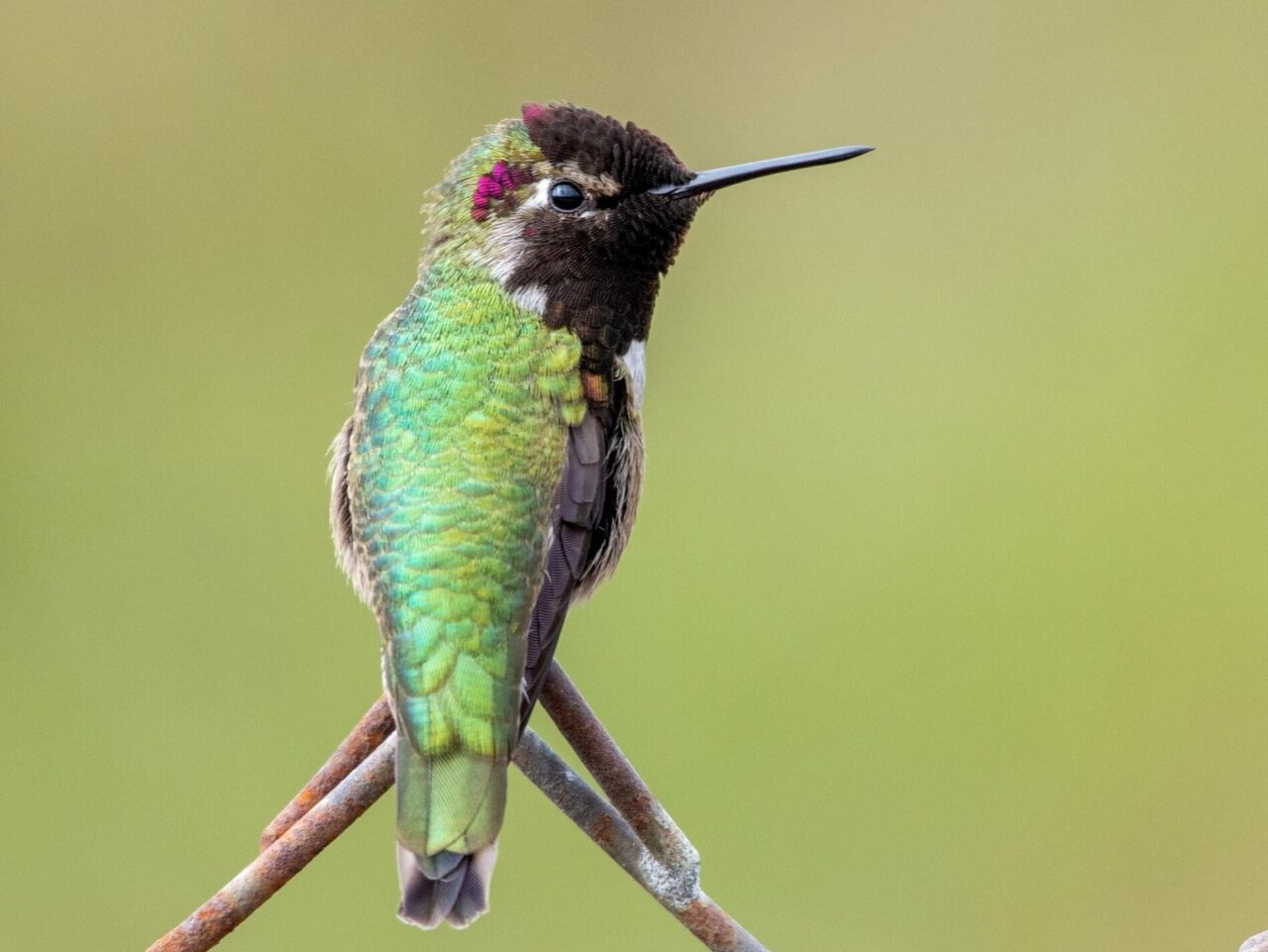
© Drew Beamer / Macaulay Library
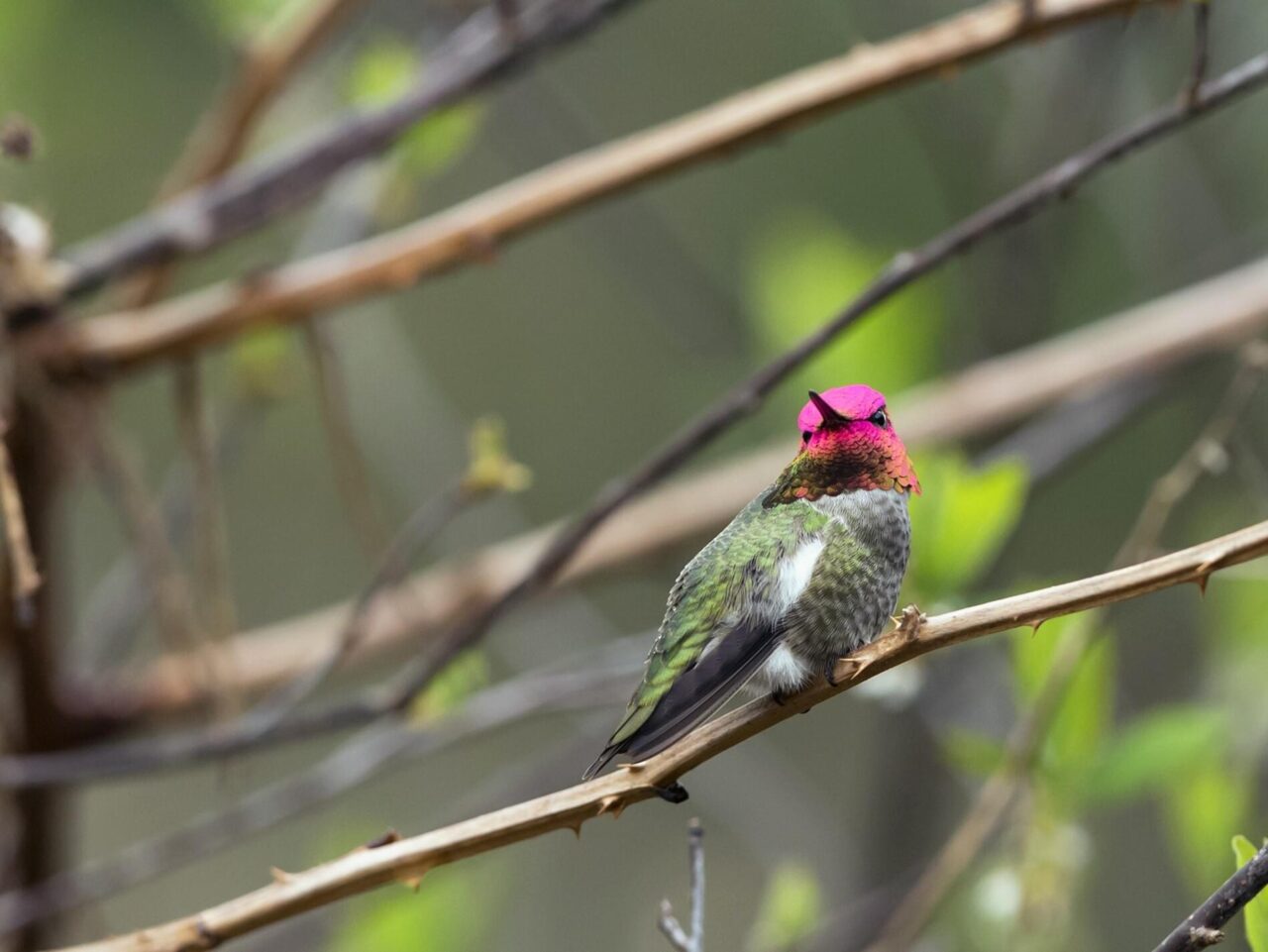
© Joshua Covill / Macaulay Library
Similar Species
When identifying hummingbirds, the first step is to look at range maps. Anna’s Hummingbird is often the largest and stockiest hummingbird in its range, and its body color is a distinctive gray and green. Costa’s Hummingbird is typically lighter gray below with less extensive green flecks on the breast and belly. They have an even bigger head than Anna’s. The gorget of an adult male Costa’s Hummingbird is a much deeper purple and it extends farther on the sides of the neck, coming to a point. Black-chinned Hummingbirds are much sleeker overall with a thinner neck, a partial whitish collar, and a longer bill. The male’s dark purple gorget is limited to just the throat, and the head is green. With practice, looking for the narrow shape of the inner six primary feathers is a diagnostic way to separate Black-chinned and Ruby-throated from all other North American hummingbirds. Rufous Hummingbirds always have some orange or buffy tones in the underparts and tail. In male Broad-tailed Hummingbirds the pink feathers are only on the throat, not on the crown.
Fun Facts
Did you know?!
- Breeding male and female Allen’s Hummingbirds have different habitat preferences. The male sets up a territory overseeing open areas of coastal scrub vegetation or riparian shrubs, where he often perches conspicuously on exposed leafless branches. The female selects nest sites in more densely vegetated areas and forests.
- Two subspecies of Allen’s Hummingbirds are recognized. They differ only slightly in appearance, but sedentarius of very southern California is nonmigratory, and the more northerly breeding, slightly smaller sasin spends the winter in Mexico.
- The Allen’s Hummingbird is remarkably early migrant compared with most North American birds. Northbound birds may depart on spring migration as early as December and arrive on the summer breeding grounds as early as January. Adult males may begin their southward fall migration in mid-May and arrive on winter grounds as early as August.